Neither New Nor Active: Auditing the Route Back Into Your Service

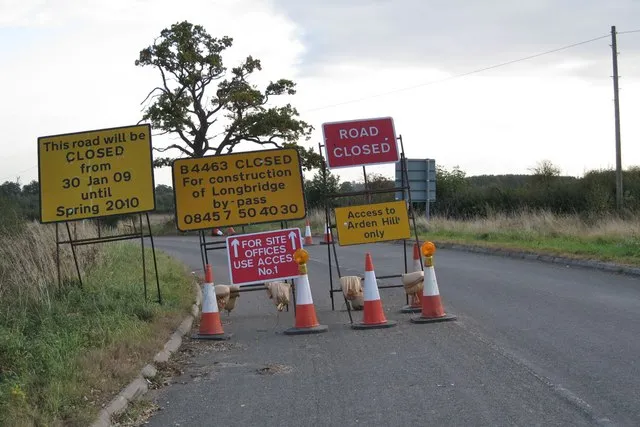
Photo: Subhrajyoti07, CC BY-SA 4.0, via Wikimedia Commons
Every service operating model contains at least two well-defined customer states: new and active. Onboarding journeys, welcome communications, first-contact handling and early-life retention programmes all assume a customer who has just arrived. Steady-state service design assumes a customer who is present, known and connected.
Between those states sits a third, and it is largely unowned: the customer who left, or drifted, and now wants to come back.
A segment defined by absence
Reactivation is difficult to design for because it is defined by what has not happened. There has been no transaction, no login, no contact — often for a period measured in years. The organisation's records may be stale, the customer's circumstances altered beyond recognition. And yet the person returning is not a stranger: they have a history, sometimes a long one, and they will judge the service against it.
UK operating models handle this unevenly. Energy suppliers have detailed processes for a customer who switches away and later returns, but those processes are built around the supply point rather than the person. Banks maintain sophisticated onboarding and separate dormant-account procedures, with very little in between. Subscription businesses often hold a lapsed-customer segment in the marketing database and no corresponding route in the service model at all.
The result is a returning customer processed as new: full onboarding, full verification, full waiting time, and a customer experience that implicitly denies the relationship that already exists.
Three kinds of returning customer
Before auditing, disaggregate. Reactivation is not one journey.
The deliberate returner left on purpose and has decided to come back. They know what they are buying and are usually comparing options. Their tolerance for friction is low and their expectations are set by the provider they have just left.
The inadvertent returner left without deciding to — a payment failed, a contract lapsed, a move went wrong, a bereavement interrupted the account. They often do not experience themselves as returning at all; they experience the service as having failed them.
The re-engaged customer never fully left. They hold an account, an asset or a relationship but have not transacted in a long time, and they arrive through a routine trigger rather than a decision.
Each type needs a different route, and each is currently served, in most operations, by whatever queue happens to catch them.
Where the model leaks
Four recurring failure points appear in audits of UK reactivation journeys.
Recognition. The model cannot match the returning customer to their history because the identifiers have changed — a new email, a new phone, a new address, a new surname. The customer is created as new and the prior relationship becomes invisible to the agent serving them.
Verification. Security checks designed for a first-time customer are applied to someone whose record is years old, and they fail. The customer is then asked to prove an identity they have held throughout, using evidence the organisation no longer holds.
Routing. Reactivation work frequently lands in general queues, where it competes with new business and cannot be prioritised. Nothing in the operating model treats the return as time-sensitive, even though the customer's decision window usually is.
Record reconciliation. Two records now exist. The old carries history, complaints, adjustments and risk flags. The new carries the live relationship. Neither is complete, and the reporting built on both is wrong in ways nobody has yet specified.
The cost of being treated as new
The obvious cost is customer effort: repeating information, waiting through onboarding, explaining a history the organisation already holds. The less obvious cost is analytical. If returning customers enter as new, they inflate acquisition volumes, distort cost-to-serve and disappear from churn analysis at the point of return. Retention reporting ends up describing a population that excludes precisely the customers whose behaviour would most inform it.
There is a risk dimension too. A returning customer's previous record may contain flags, adjustments or unresolved complaints that a fresh onboarding record will never surface. The service is then delivered without the history that would have changed how it was handled.
Six tests for a reactivation audit
- Define the state. Does the operating model contain an explicit state for previously known, currently inactive? If not, everything downstream will be improvised.
- Test recognition. Take a sample of recent returning customers and trace how each was matched to their prior record. Count the proportion matched manually, matched by the customer, or not matched at all.
- Time the route. Measure elapsed time from first re-contact to a transacting account and compare it with the equivalent new-customer journey. A returning customer should not be slower than a new one.
- Audit verification. Confirm whether the checks applied are the first-time checks, the existing-customer checks, or neither, and identify what happens when they fail.
- Review the handoffs. Establish who owns the return between first contact and full service, and whether that ownership is recorded anywhere the next team can see.
- Reconcile the records. For a sample, quantify the duplicate records created and test whether complaints, adjustments or risk flags from the old record were visible to the team serving the return.
Giving the return a route
The remedy is not a campaign. It is a modest amount of operating model design: an explicit state, a recognition rule that tolerates changed identifiers, a proportionate verification route that respects the existing relationship rather than restarting it, a named owner for the handover, and a record-merging discipline that keeps history intact.
Returning customers are usually discussed as a commercial opportunity. Operationally, they are better understood as a test of whether the model remembers. Most do not — not because the data is absent, but because nobody designed the route by which it would be used.