The Other Service Estate: Auditing the Channels Outside the Digital Journey
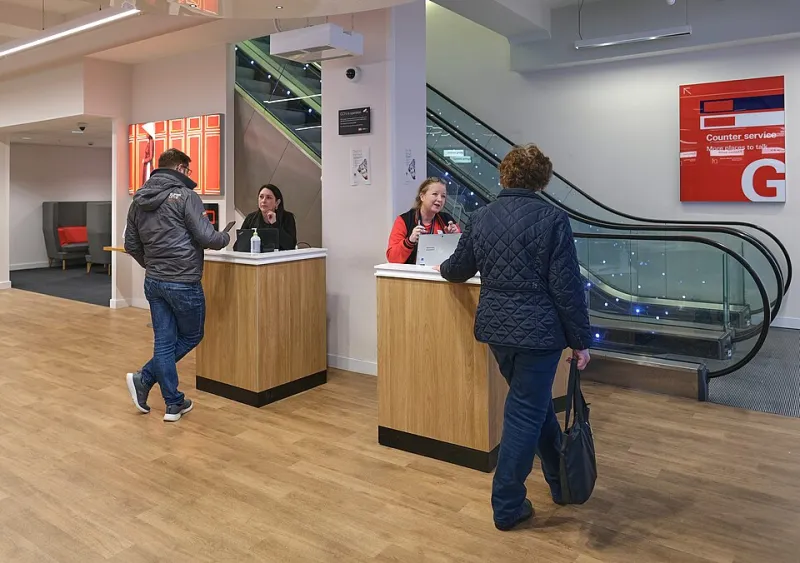
Photo: Anthony O'Neil , CC BY-SA 2.0, via Wikimedia Commons
Most service operating models now begin with a digital assumption: the app, the portal, the web form. The design work, investment case and performance reporting follow that assumption. Yet post, telephone and face-to-face contact remain part of the live service estate in many UK organisations, carrying vulnerable customers, complex cases, statutory correspondence and the enquiries that never quite fit the digital path. The risk is not that these channels exist. The risk is that they sit outside the model, managed as exceptions, and therefore escape the same scrutiny as the digital journey.
Why non-digital routes become invisible
The blind spot usually forms for sensible-sounding reasons. Digital metrics are richer and easier to present. Telephony is often treated as a legacy cost centre. Post is viewed as a residual output rather than an input route. In-person service is frequently owned at a local level and reported anecdotally. Each of these positions may be defensible in isolation, but together they create a gap between the service that is designed and the service that is actually delivered.
A channel estate audit is not an argument against digital investment. It is a way of making the whole operating model visible before decisions are taken about migration, consolidation or closure. The audit should answer four questions: what demand actually arrives by each route, what service promises apply, what the route truly costs, and who is entitled to change it.
Step one: establish a demand baseline that includes the quiet channels
Start with a four-week demand baseline, supplemented by seasonal or annual peaks where relevant. Digital analytics will give you session and completion data, but it will not tell you why someone telephoned after abandoning a form, or what arrived in the post because the online route would not accept an attachment. Pull telephony volumes, call reasons and repeat-contact rates. Sample inbound and outbound post, including freepost and business-reply returns. Collect footfall and appointment data from in-person sites, including partner or outreach locations.
Beware of double counting. A customer may start online, telephone to clarify, then post evidence. Record the route sequence, not just the first touch. The aim is a demand picture by reason, customer segment and outcome, not a league table of channel popularity.
Step two: map the route, not only the channel
A channel is a front door. A route is everything that happens after it. Map each non-digital route from entry to resolution, including handoffs into back-office teams, specialist units, suppliers and physical fulfilment. Note where the route depends on a shadow process: the inbox monitored by one person, the printed form re-keyed into a workflow, the local office that accepts documents because the central process cannot.
Pay particular attention to accessibility and vulnerability. A route may be low-volume yet essential because it is the only practical option for a customer with a disability, language need, low digital confidence or urgent personal circumstance. In a UK context, these considerations sit alongside regulatory expectations about fair treatment and reasonable adjustments. The audit should identify where non-digital access is a designed safeguard and where it is an accidental workaround.
Step three: stress-test the service-level assumptions
Service levels are often written for the digital channel and applied unevenly elsewhere. Test the assumptions explicitly. Does the published response time for written correspondence account for Royal Mail transit and internal scanning delays? Does the telephony service level reflect queuing at peak times or only average handling time? Are in-person appointments available within the period the customer is told to expect? Do statutory or contractual clocks start when a letter is received, when it is opened, or when it is indexed?
Run a small number of end-to-end tests for each non-digital route. Send a letter, make a call, book an appointment, and observe the elapsed time and handoffs. Compare the result with the service promise. Where the promise cannot be met, decide whether to change the promise, change the route, or explicitly manage the exception. Leaving the gap undocumented is the least defensible option.
Step four: calculate cost-to-serve by route
Cost-to-serve work often stops at the digital channel because unit costs are easier to model. Extend the analysis to post, phone and in-person routes, using fully loaded costs. Include handling time, rework, print and postage, scanning and indexing, estate and travel costs, and the management overhead of local variations. Avoid cross-subsidising non-digital routes invisibly through digital budgets; that practice makes migration decisions look better than they are and hides the cost of failure demand.
A useful output is a route-level cost profile segmented by reason and outcome. A telephone call that resolves a complex case may be excellent value. A telephone call prompted by a broken digital journey is a cost of poor design. The audit should distinguish the two.
Step five: assign decision rights and ownership
Non-digital channels frequently lack a clear owner. Digital product teams own the portal. Operations owns the contact centre. Estates or local management owns the office. Nobody owns the rules that determine which route a customer is allowed to use. The audit should identify who can change channel eligibility, opening hours, forms, scripts, postal addresses and exception criteria. Record where decisions are made and whether they are subject to change control.
Without this step, the channel estate drifts. A form is withdrawn, a phone line is redirected, an office reduces its opening hours, and the operating model absorbs the consequences without a decision being taken at the right level.
Step six: make a design disposition for every route
End the audit with an explicit disposition for each non-digital route: retain and design, migrate with support, consolidate, or retire with safeguards. 'Retain as an exception' is not a disposition. If a route is to remain, give it a service definition, an owner, performance measures and a place in the service catalogue. If it is to be migrated, fund the assisted transition and monitor the customers who do not move. If it is to be retired, identify the affected customer groups and put an alternative in place before closure.
The channel estate is part of the operating model, not a remnant around its edges. Auditing post, phone and in-person routes gives service leaders a more honest view of demand, cost and risk, and a better basis for deciding which routes deserve deliberate design in a digital-first organisation.